

Science-based jet lag relief

Beat Jet Lag.
Sync Before You Fly.

A personalised light, caffeine, and sleep plan that resets your body clock around your flight. Start adjusting before you even leave.

Get Armchair Jetlag on Google Play
Free for your first tripNo credit card neededScience-backed
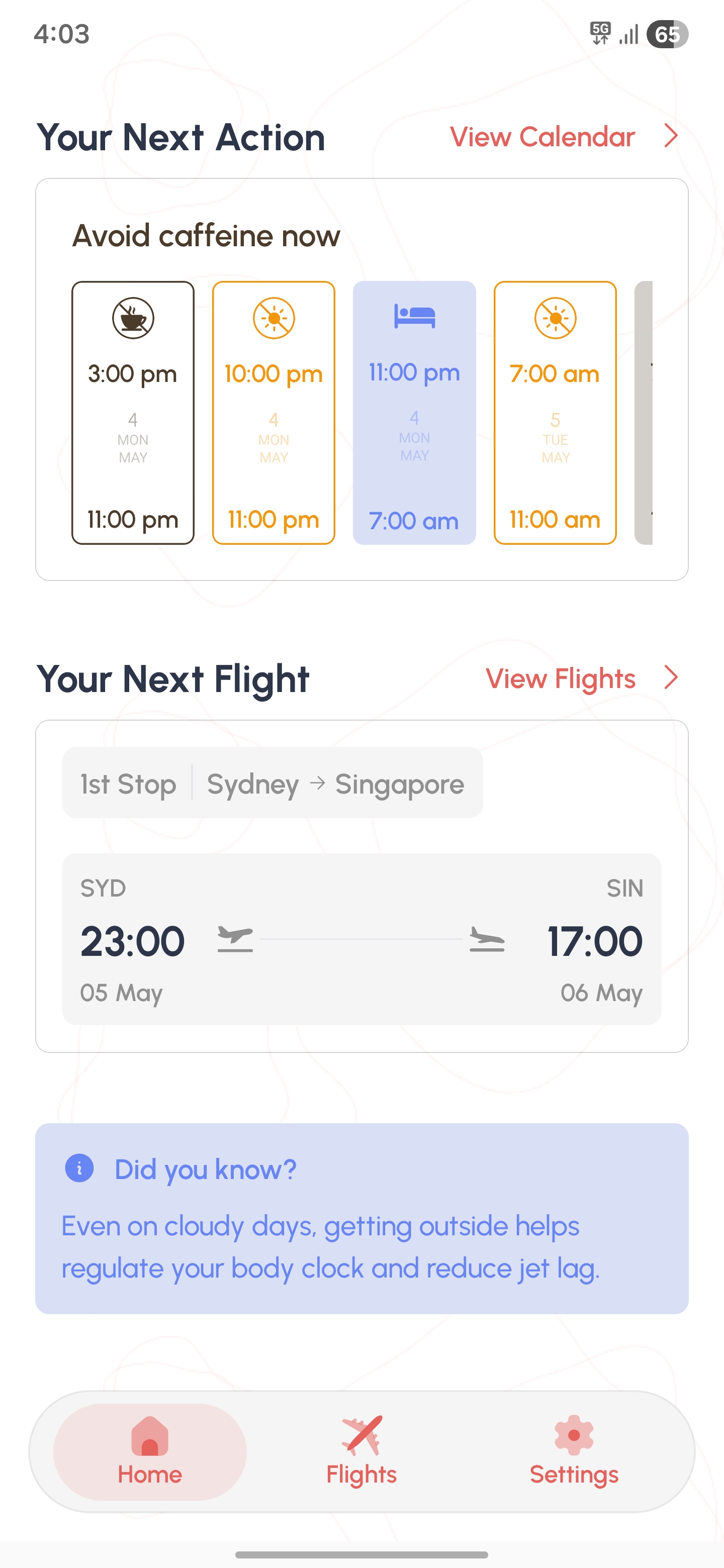
Armchair Jetlag app home screen

How we beat jet lag

The only jet lag app built on circadian science

Circadian Rhythm Reset

Personalised light exposure, caffeine cutoff, and sleep schedule adjustments based on chronobiology. The most effective jet lag prevention method.

Jet Lag Plan in Seconds

Enter your flight details and get a complete, personalised jet lag treatment plan tailored to your exact route, departure time, and time zone shift.

Arrive Sharp, Every Time

Minimise travel fatigue and time zone confusion. Reduce brain fog, sleep disruption, and daytime drowsiness. Arrive performing at your best.

Plan your jet lag schedule

How it works

Three steps to overcome jet lag before you fly

  1. 01

    Enter your flight

    Add your departure city, destination, and travel dates. We support any long-haul or international route.

  2. 02

    Get your jet lag plan

    We calculate your optimal light exposure windows, caffeine cutoff times, and sleep schedule shifts to beat jet lag.

  3. 03

    Follow & arrive ready

    Get daily nudges before you fly. Land alert, sharp, and already adapted to your destination's time zone.

Your Daily Schedule

Your personalised jet lag schedule, day by day.

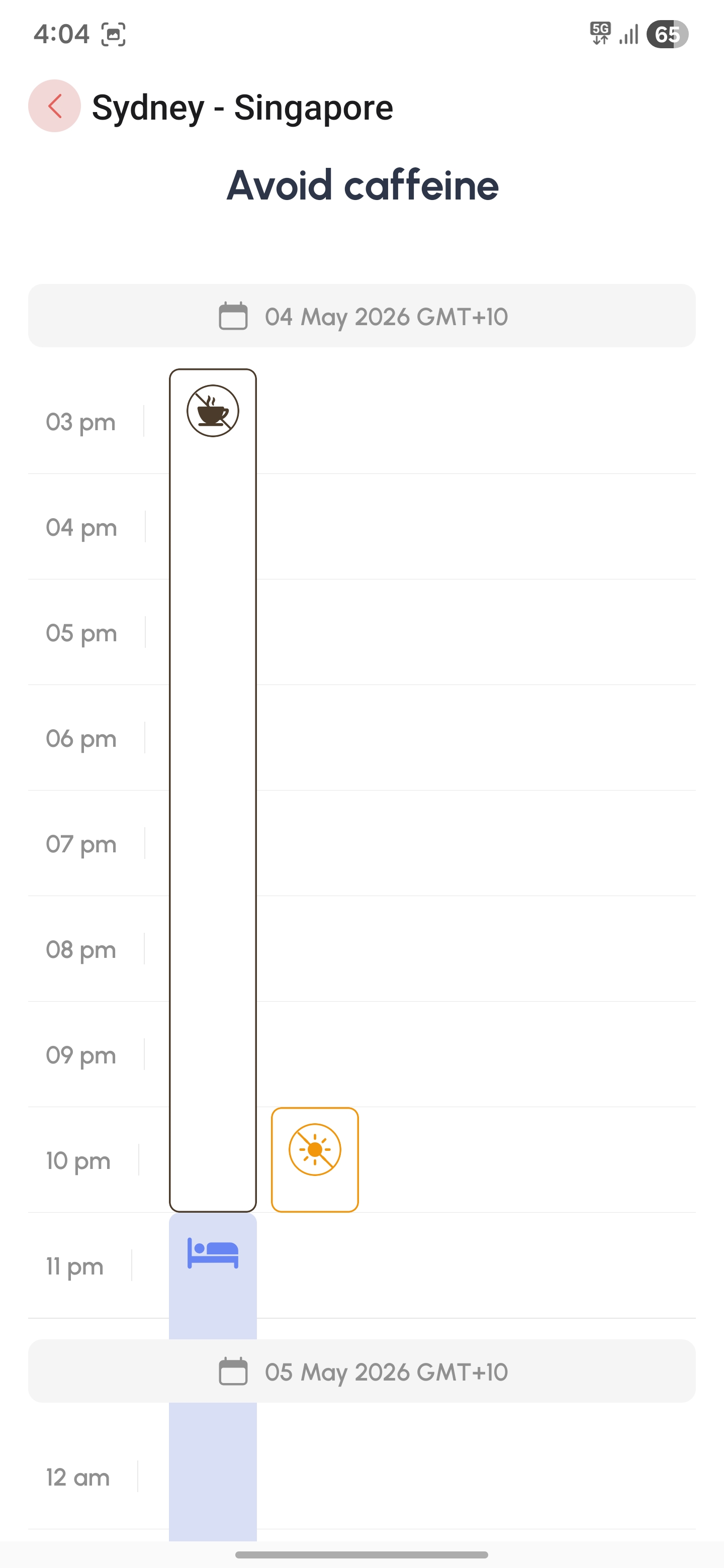
The app gives you a clear daily timeline: when to seek sunlight, when to cut caffeine, and when to shift your sleep window. The scientifically proven way to prevent jet lag without medication.

  1. Avoid caffeine
    Avoid caffeine
    3:00 - 11:00 pm
  2. Avoid light
    Avoid light
    10:00 - 11:00 pm
  3. Sleep window
    Sleep window
    11:00 pm - 7:00 am
Armchair Jetlag daily schedule

The Science

Chronobiology-backed jet lag treatment. No pills, no gimmicks.

Your circadian rhythm is controlled by light exposure and sleep pressure. Armchair Jetlag models both signals to generate a personalised pre-flight schedule: the most evidence-based way to beat jet lag and arrive fully adapted.

Faster adaptation
87%
Less brain fog
40+
Destinations

The science, simplified

Why jet lag happens, and how to beat it

The science of jet lag is well-established. Here is what the research says about circadian rhythm, light, and sleep, and how the app applies it.

Sunlight icon representing light exposure for circadian rhythm

Why Light Exposure Matters

Light is the most powerful signal for resetting your circadian rhythm. Even 15-30 minutes at the right time accelerates jet lag recovery. At the wrong time, it makes it worse.

Caffeine icon representing optimal caffeine timing for jet lag

How Caffeine Really Works

Caffeine has a 5-7 hour half-life, so a 2 PM coffee still affects your sleep at 9 PM. Poorly timed caffeine is one of the most overlooked causes of jet lag fatigue.

Sleep icon representing body clock and sleep schedule adjustment

Your Body Clock, Explained

Your body clock controls sleep, alertness, and mood. Cross time zones and it keeps running on home time, with a natural recovery rate of just 60-90 minutes per day.

Why Pre-Adjustment Works

Pre-flight jet lag adjustment is the most effective prevention strategy. Shifting your sleep window 30-60 minutes per day before departure can cut recovery time in half.

Did you know?

Even on cloudy days, outdoor light is bright enough to shift your body clock.
Caffeine stays active for up to 8 hours, long after the buzz fades.
Your body clock only adjusts about 1 hour per day without intervention.
Blue light from screens affects your circadian system the same way sunlight does.
Eastward travel is typically harder to recover from than westward.
Pre-adjusting your sleep can cut jet lag recovery time in half.

What travellers say

Real results from real travellers

I fly Sydney to London four times a year. Armchair Jetlag is the first thing that's actually made a difference. I landed feeling human for once.

JR
Owen B.
Management Consultant

I travel every few weeks for work and jet lag was costing me full days of productivity. Armchair Jetlag had me adjusted within 24 hours of landing in Tokyo.

SK
Sarah K.
Product Director

The caffeine and light timing tips felt counterintuitive at first, but by day two in New York I was completely adjusted. Genuinely impressed.

TW
Tom W.
Frequent Business Traveller

FAQ

Frequently Asked Questions

Everything you need to know about the app and the science. Still have a question? Reach out.

Jet lag happens when your internal body clock falls out of sync with local time at your destination. Your circadian rhythm governs sleep, digestion, and hormone release on a roughly 24-hour cycle tied to light and darkness. When you cross multiple time zones quickly, that cycle is disrupted and your body needs time to catch up. Symptoms include fatigue, difficulty sleeping, brain fog, and digestive issues.

Most people experience roughly 1 to 1.5 days of adjustment per time zone crossed, though it varies by direction of travel and individual biology. Flying east is generally harder than flying west because your body finds it easier to delay sleep than to advance it. Without any intervention, recovery from a Sydney to London flight can take up to two weeks.

The most effective approach is to shift your body clock before you fly, rather than waiting to recover after landing. Adjusting your sleep timing, light exposure windows, and caffeine schedule in the 2 to 4 days before departure significantly shortens recovery time. Armchair Jetlag generates a personalised day-by-day plan for your exact route so you can start adjusting immediately.

Yes. Light is the strongest signal your circadian system uses to set its internal clock. Bright light at the right time of day advances or delays your rhythm depending on your destination. Getting light at the wrong time can push your clock in the wrong direction and make jet lag worse. Armchair Jetlag calculates your optimal light exposure windows based on your flight direction and timing.

It is not about avoiding caffeine but timing it correctly. Caffeine taken too late in the day delays your circadian clock, which can help when flying west but worsens recovery when flying east. Cutting caffeine off at the right time for your destination's time zone is one of the simplest and most effective adjustments you can make before and after a long-haul flight.

Flying east is harder for most people. Your circadian rhythm naturally runs slightly longer than 24 hours, making it easier to stay up later (flying west) than to fall asleep earlier (flying east). The more time zones you cross eastward, the longer the recovery. Read our full breakdown for strategies tailored to each direction. Read our full guide →

Yes. Low-dose melatonin (0.5 to 1 mg) taken at your destination's target bedtime is one of the most evidence-backed tools for shifting your circadian clock. Timing is critical: melatonin at the wrong time shifts your clock in the wrong direction. Armchair Jetlag focuses on light, sleep, and caffeine scheduling, which can be combined with melatonin for best results.

Ideally 2 to 4 days before your flight. Small daily shifts in sleep timing and light exposure in the lead-up to departure have a compounding effect on your circadian rhythm. Even starting one day before your flight is more effective than waiting until you land. Enter your flight details in Armchair Jetlag and you will get a plan that starts right away.

Your first trip is free on signup with no credit card required. After that, you can choose between a monthly subscription for unlimited trips or a 5-trip pack if you travel less frequently. Both options are available in the app.

Beat Jet Lag. Land Ready. Every Time.

Download the Armchair Jetlag app and start your first personalised jet lag prevention plan today. Free for your first trip.

Get Armchair Jetlag on Google Play